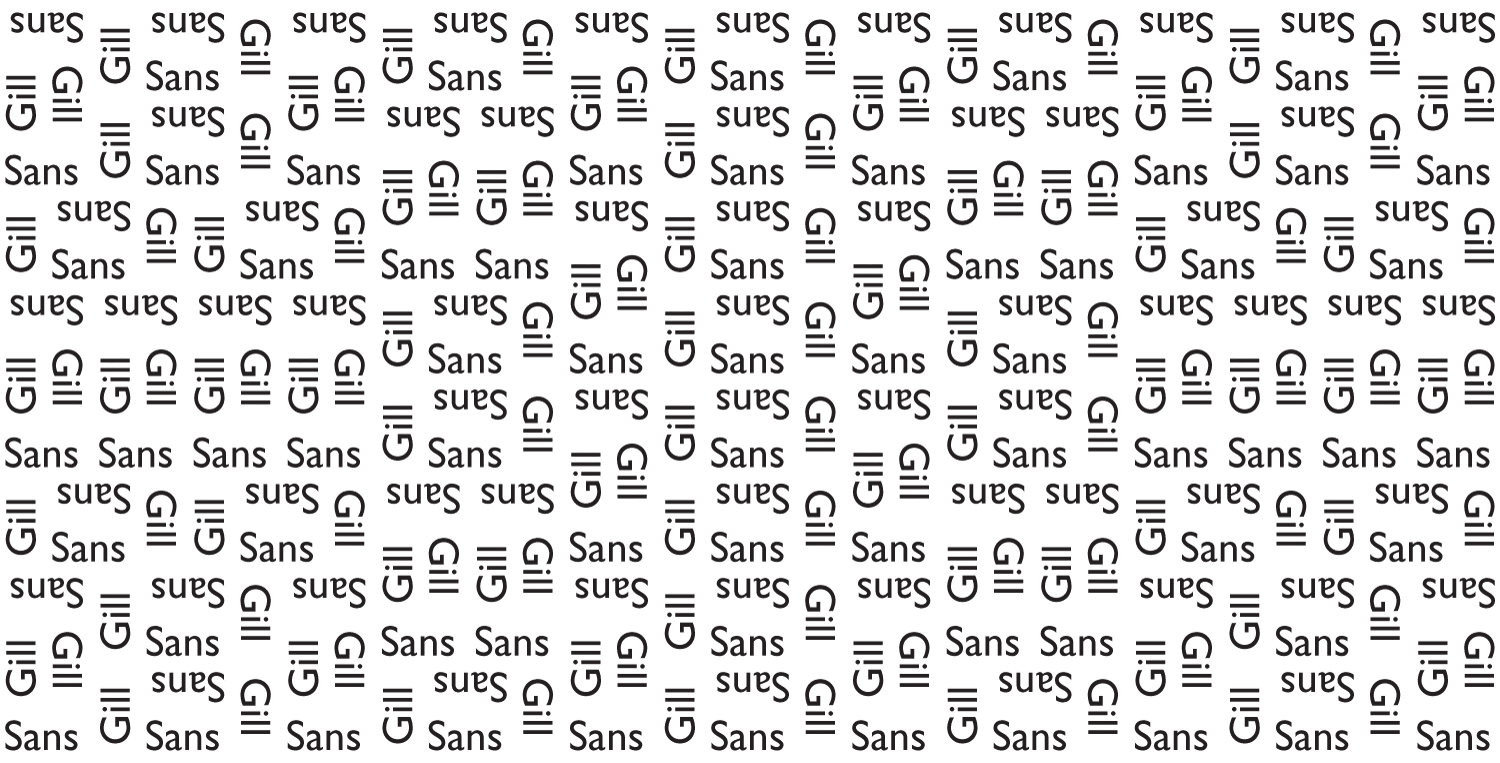
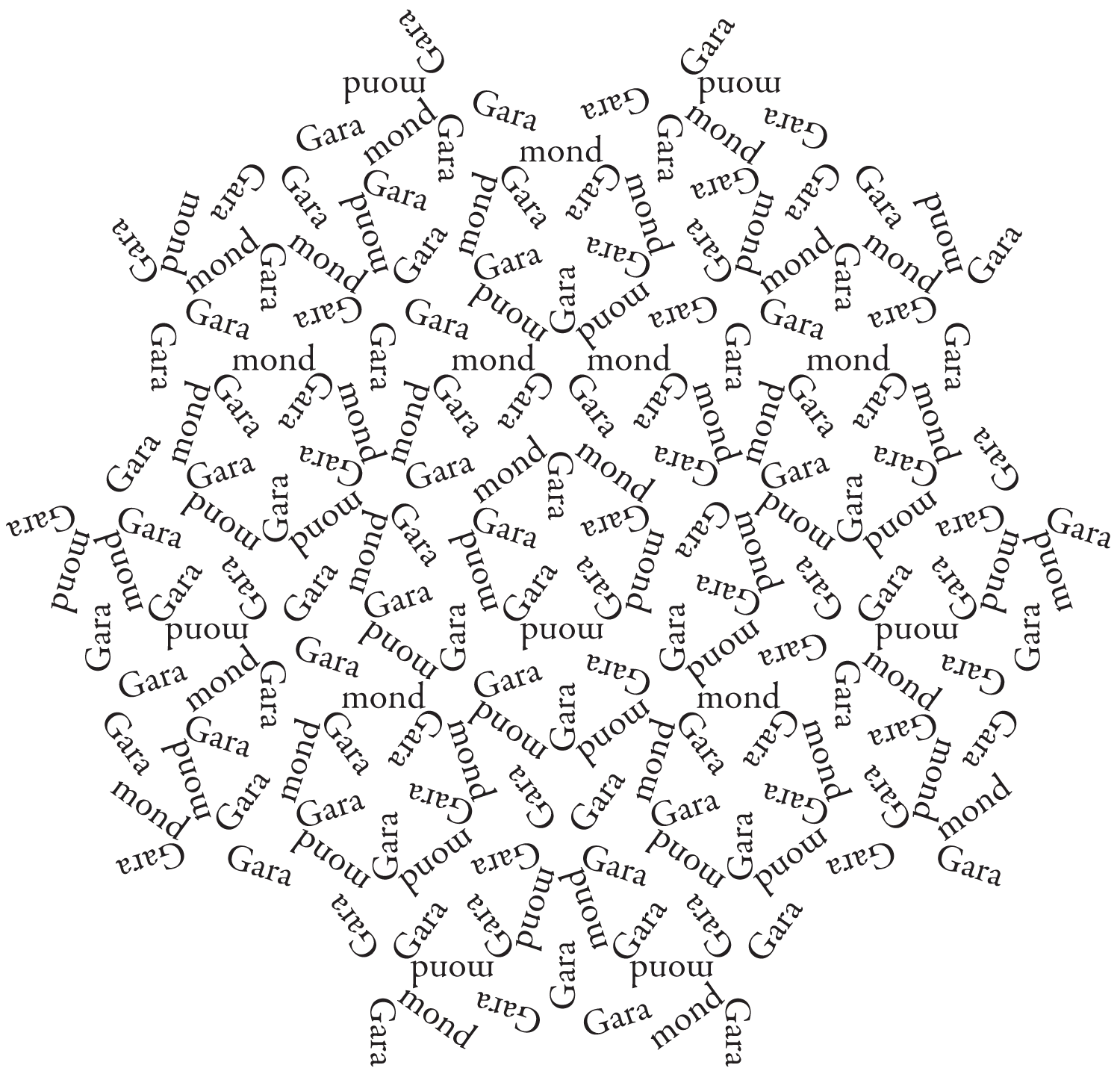
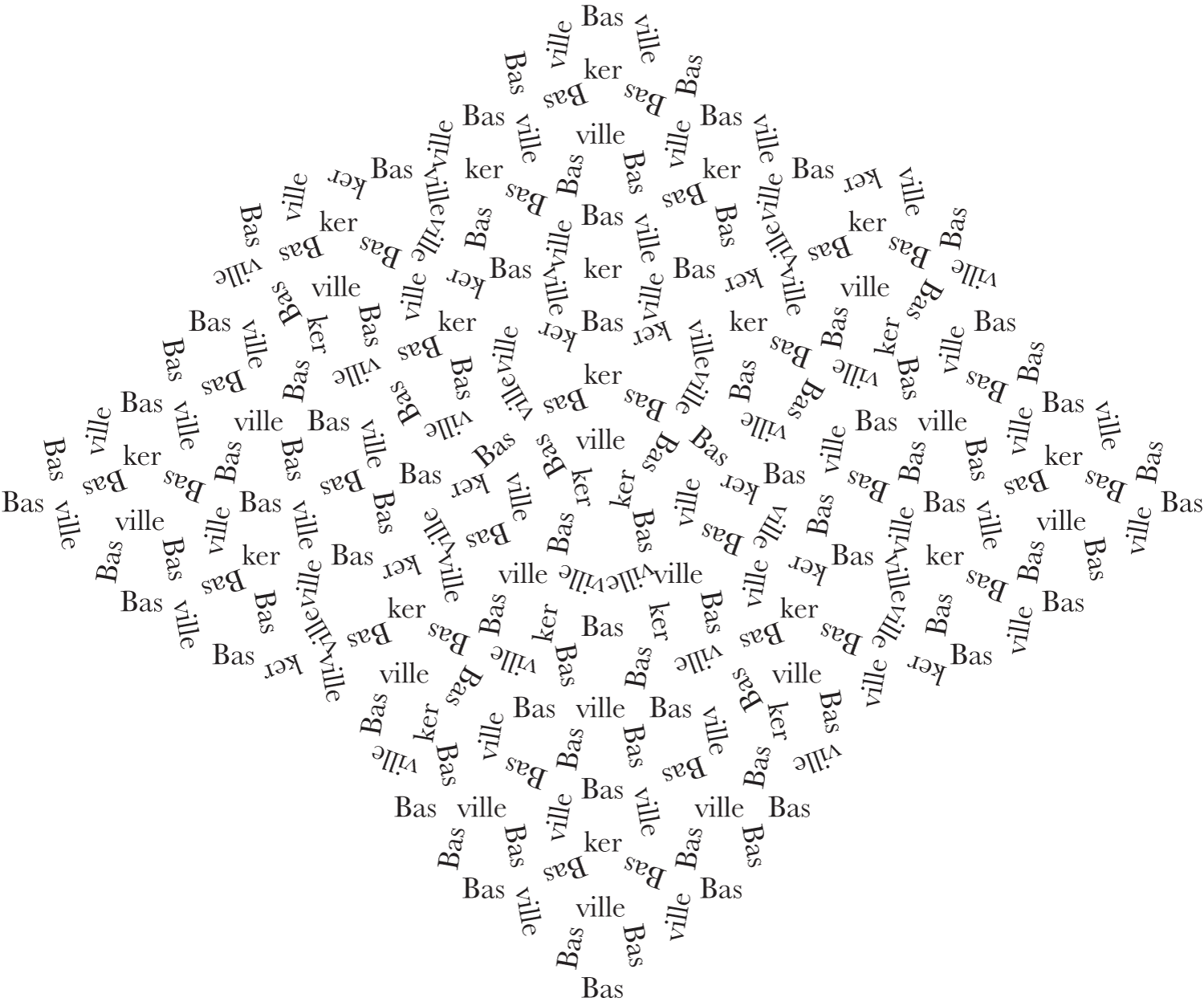
I have been playing with spreading text over tilings (for a paid maths art project!). Here are some studies based on some favorite typefaces. Click for higher resolution images.
Very cool… reminds me of some ambigram related designs, e.g. Scott Kim’s http://www.scottkim.com/inversions/index.html. Looks like there are many ways in which the tiles interact locally with these more complicated patterns, which would make doing something with ambigrams difficult.
You are right that the local behaviour here is not fixed (as it is for periodic tilings). However the local behaviours are quite limited, especially for the Penrose tiling (you just have two edge types). I am sure something could be done.
Not very easy to read: At least the way I did it, some elements need to be interpreted in 4 different ways (there are 2 edge types but each edge appears twice on each of the two tiles).


Very cool… reminds me of some ambigram related designs, e.g. Scott Kim’s http://www.scottkim.com/inversions/index.html. Looks like there are many ways in which the tiles interact locally with these more complicated patterns, which would make doing something with ambigrams difficult.
Whoops, link should be to this page: http://www.scottkim.com/inversions/gallery/synergy.html
Those are cool!
You are right that the local behaviour here is not fixed (as it is for periodic tilings). However the local behaviours are quite limited, especially for the Penrose tiling (you just have two edge types). I am sure something could be done.
Pingback: Pattern | Tiling Typography « Layman's layout
I did something like that with the Penrose tiling a few years ago: http://www.segerman.org/autologlyphs.html#penrose_tiling
Not very easy to read: At least the way I did it, some elements need to be interpreted in 4 different ways (there are 2 edge types but each edge appears twice on each of the two tiles).
Pingback: Travels in a Mathematical World